Introduction:
In today’s hyper-connected world, mobile phones serve as communication devices that provide users access to their digital identity, financial services, social connections, and online security. The ecosystem depends on SIM data information, which contains essential records that establish a mobile user identity, together with their network connection methods and communication control details.
SIM data information refers to the personal, technical, and usage-related data associated with a Subscriber Identity Module (SIM). Telecom operators and regulatory authorities use this data for storage, processing, and monitoring to protect secure communication, maintain service quality, and comply with legal requirements. Organizations and individual users need to understand SIM data information because mobile networks have become the primary method for conducting sensitive activities.
The article examines SIM data information and its data components, collection methods, management procedures, significance, and digital world privacy and security protection methods.
What is SIM Data Information?
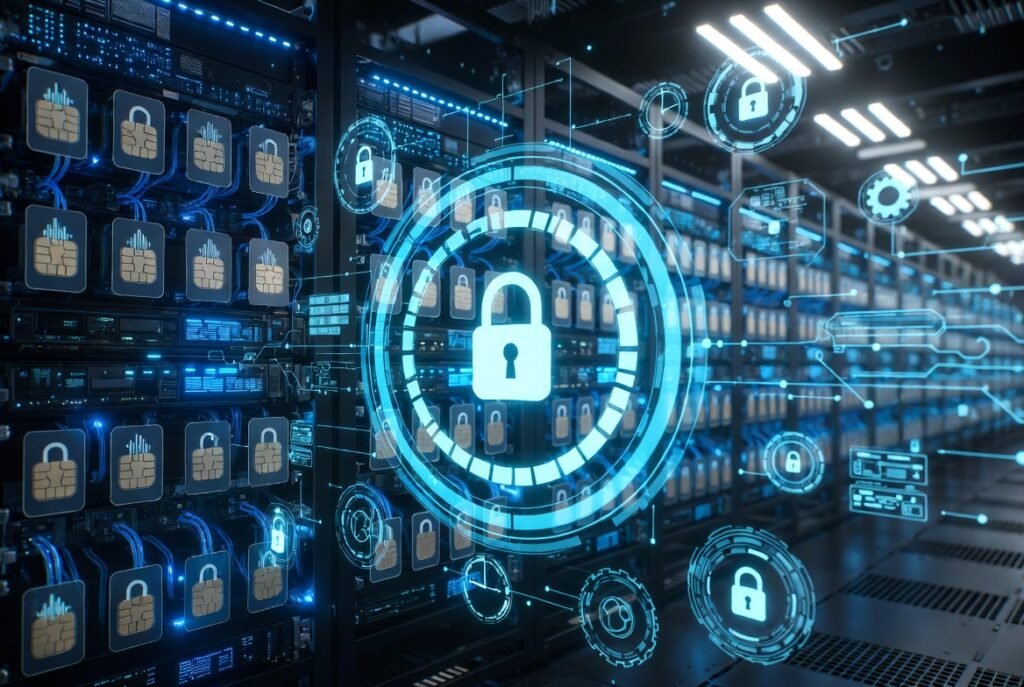
SIM Data Information: SIM data information refers to the total data that is associated with a SIM card and is necessary for a mobile device to connect to a cellular network. It contains identity information, network credentials, service details, and usage information. This data is necessary for telecom networks to authenticate users, provide services, and establish secure communication channels.
SIM data differs from general mobile data (such as internet usage) because it primarily concerns subscriber identity and network access. It is necessary for all SIM cards in a network to be uniquely identified and tracked.
Types of SIM Data Information:
The SIM data information system separates its information into different categories, which includethe following:
1. Subscriber Identity Data
This data set contains personal details that connect to the SIM card:
- The subscriber needs to provide their complete name
- The National ID or passport number
- The subscriber’s date of birth
- The subscriber address, which varies by location
- The subscriber needs to provide biometric information according to legal requirements
These data elements function to establish responsibility and tracking mechanisms.
2. SIM Technical Data
The SIM card contains technical identification components, which include
- International Mobile Subscriber Identity (IMSI)
- Integrated Circuit Card Identifier (ICCID)
The system uses authentication keys together with encryption credentials to enable secure SIM authentication.
3. Mobile Number and Network Data
- Mobile phone number (MSISDN)
- Network operator information
- The dates when the SIM card was activated and deactivated
- The network access control settings
4. Usage and Activity Data
The SIM generates this data when it is used:
- Call records that include only metadata and exclude voice content
- SMS transaction records
- The system records data usage during sessions
- The data shows the history of international roaming
The information enables operators to control their services while maintaining compliance with legal requirements.
5. Service and Subscription Data
- The system tracks whether users have chosen prepaid or postpaid service
- The customers can select between different data packages and bundles
- Customers can access additional services that provide extra value
- The system tracks both billing records and customer payment details.
How SIM Data Information is Collected?
SIM data information is collected at multiple stages:
- During SIM registration, personal and identity data are recorded.
- At activation, network credentials are generated and stored.
- During daily usage, activity and service data are logged.
- During updates or changes, SIM replacement, number portability, or ownership transfer updates records.
All information collection is governed by national telecom laws and regulatory policies.
Importance of SIM Data Information:
1. Network Authentication and Access
The SIM data system ensures that only people with proper authorization can access mobile networks while preventing the use of fake SIM cards and unauthorized SIM cards.
2. Fraud Prevention
The correct SIM data information enables detection of multiple fraud types, which include:
- SIM card duplication
- Identity fraud
- Counterfeit registrations
- Financial frauds
3. Lawful Interception and Investigation
Authorities use SIM data information according to legal procedures to assist their criminal investigations.
4. Service Quality and Personalization
Telecom companies use SIM data information to:
- Enhance network performance
- Provide personalized data services
5. Digital Identity and Online Security
The system uses SIM data information as a standard method for two security purposes, which include:
- OTP authentication
- Two-factor authentication
- Mobile digital identity
User Privacy
Privacy is one of the biggest concerns surrounding SIM data information.
Data Protection Measures
- Encryption of sensitive data
- Limited access controls
- Secure storage systems
- Regular audits and compliance checks
Legal Safeguards
Most nations have laws that require:
- Data minimization principles
- User consent requirements
- Penalties for data misuse
Risks and Challenges in SIM Data Management
Despite robust systems, there are still challenges:
1. Data Breaches
Centralized databases can be vulnerable to cyber attacks.
2. Unauthorized Access
Lack of controls can put SIM data at risk.
3. Identity Theft
SIM data can be used for:
- SIM swap fraud
- Financial theft
- Account hijacking
SIM Swap Fraud
SIM swap fraud is a major risk where attackers:
- Gain access to SIM data
- Transfer a number to a new SIM
- Intercept OTPs and messages
Strong verification and monitoring systems are critical to prevent this.
1. SIM Data Information and Consumer Rights
The information from SIM data exists as both a technical matter and a regulatory requirement because it directly impacts consumer rights. The telecom laws of many countries treat SIM users as data owners, which enables them to control their personal information.
The public has the right to:
- Learn about the SIM data that companies collect from them
- Request correction of incorrect or outdated data
- Be informed if their data is shared with third parties
- Request the deactivation of SIMs that are registered without their approval
Telecom operators use these rights to create a relationship of trust with their users. Consumers who understand their rights will find it easier to defend themselves against identity theft and unauthorized SIM registration.
SIM Data Retention Policies
Data retention represents another vital component of SIM data information. Telecom operators must legally keep SIM-related data for a specific duration after a SIM has been deactivated.
Why Data Retention Matters
- It aids criminal investigations
- It helps to resolve billing disputes
- It supports both fraud detection and audits
The retention period for data must comply with specific legal requirements which differ between countries. Privacy risks increase when organizations keep data beyond its required retention period, so regulators create rules that protect both security and privacy needs.
In Emergency and Disaster Management
Emergency situations and natural disasters depend on SIM data for their critical functions. Governments and telecom operators use SIM data to:
- Send emergency alerts and warnings
- Identify affected regions through network activity
- Support rescue and relief coordination
- Enable location-based emergency services
The SIM data information system enables organizations to quickly transmit life-saving communication during emergency situations.
SIM Data Information and SIM Swap Fraud
SIM swap fraud is a major risk where attackers:
- Gain access to SIM data
- Transfer a number to a new SIM
- Intercept OTPs and messages
Strong verification and monitoring systems are critical to prevent this.
Role of Regulators and Telecom Operators
Telecom Operators
- Maintain accurate SIM data records
- Protect subscriber information
- Comply with data retention laws
Regulatory Authorities
- Define SIM data policies
- Monitor compliance
- Protect consumer rights
SIM Data Information in Emergency and Disaster Management:
SIM data plays a critical role during emergencies and natural disasters. Governments and telecom operators use SIM data to:
- Send emergency alerts and warnings
- Identify affected regions through network activity
- Support rescue and relief coordination
- Enable location-based emergency services
In such situations, SIM data information can save lives by ensuring rapid communication when it matters most.
SIM Data and Number Portability
Mobile number portability is a service that enables users to change telecom operators without changing their mobile number. This service is heavily dependent on correct SIM data information.
The key requirements for this service are:
- Validation of subscriber identity
- Secure transfer of SIM data
- Prevention of unauthorized porting
- Incorrect SIM data management may result in fraud or loss of service, making proper data validation critical.
- SIM Data Information and Cross-Border Roaming
International roaming is another service that requires SIM data information. When a user travels to another country, their SIM data information needs to be validated on foreign networks.
This requires:
- Secure transfer of SIM credentials
- Adherence to international telecom regulations
- Prevention of international roaming fraud
Correct SIM data information ensures seamless service and prevents users from being charged exorbitantly or having unauthorized access.
Role of SIM Data in IoT (Internet of Things)
SIM data information is no longer confined to mobile phones. It is now the foundation of the Internet of Things (IoT) ecosystem.
IoT devices that use SIM or eSIM are:
- Smart meters
- GPS tracking systems
- Connected cars
- Industrial monitoring systems
Handling SIM data information for millions of devices is not an easy task and requires sophisticated systems that can manage scalability, security, and automation.
Ethical Use of SIM Data Information
Ethical practices are increasingly gaining significance in the management of SIM data information. Telecom companies and the government must therefore ensure that SIM data is used for:
- Legitimate purposes only
- Not misused for surveillance
- Not used for commercial gain
Ethical use of SIM data information enhances public trust and promotes the sustainability of digital communication systems.
SIM Data Information and Digital Inclusion
SIM data information systems also promote digital inclusion. They provide access to mobile communication for underserved communities.
Effective management of SIM data information helps:
- Improve mobile coverage in rural areas
- Promote digital identity initiatives
- Provide access to mobile money services
This promotes social and economic development, particularly in developing areas.
Operational Challenges for Telecom Operators
From an operational point of view, handling SIM data information is a complex task. Telecom operators are faced with the following challenges:
- Dealing with a large amount of data
- Providing real-time updates
- Avoiding duplication of data
- Training personnel on compliance guidelines
Sophisticated data management solutions and automation tools are being increasingly employed to overcome these difficulties.
Strategic Significance of SIM Data Information
SIM data information is of strategic significance to telecom operators. It can be employed for the following purposes when used in a responsible manner:
- Market analysis and forecasting
- Network development plans
- Service optimization
But it should always be remembered that there are limitations imposed by privacy laws and ethics.
FAQS:
1. What is SIM Data Information?
SIM Data Information refers to the registered details linked to a SIM card, including the owner’s name, CNIC, network provider, and activation status.
2. How can I check SIMs registered on my CNIC in Pakistan?
You can check through the official system provided by Pakistan Telecommunication Authority (PTA).
3. Is it safe to check SIM data online?
Yes, but only through official and authorized platforms. Avoid unofficial websites that claim to provide personal SIM details.
4. Why is SIM verification important?
SIM verification prevents fraud, identity theft, and illegal mobile usage by ensuring every SIM is registered under a valid CNIC.
5. Can someone else use a SIM on my CNIC?
No, SIM cards must be registered through biometric verification to the rightful CNIC holder.
6. What should I do if an unknown SIM is registered on my CNIC?
Immediately contact your mobile network provider or visit the nearest franchise to block the unauthorized SIM.
7. Is checking SIM information free?
Checking the number of registered SIMs through official methods is usually free or may require a small standard SMS charge.
8. Is accessing someone’s SIM data legal?
No, accessing another person’s SIM information without permission is illegal and punishable by law.
How many SIMs can be registered on one CNIC in Pakistan?
According to rules set by Pakistan Telecommunication Authority (PTA), a limited number of SIMs can be issued against one CNIC across all mobile networks.
10. Can I transfer SIM ownership to another person?
Yes, SIM ownership can be transferred by visiting the official franchise of your mobile network provider and completing the biometric verification process.
Conclusion
The SIM data information is the unseen backbone of mobile communication. It provides secure access to the network, safeguards the user against fraud, assists law enforcement, and makes possible the digital world. As mobile technology evolves, the prudent use of SIM data information will remain crucial to ensuring trust, security, and innovation in the telecom sector.
Leave a Reply